Reading time:
6 min
Category:
Trends
From experience first to AI-supported planning: these 5 trends show how business events are changing and what companies should pay attention to now.


From experience first to AI-supported planning: these 5 trends show how business events are changing and what companies should pay attention to now.

Business events are changing faster than ever. New expectations, technological developments and changing ways of working mean that classic event formats are increasingly outdated.
Today, companies face the challenge of not just organising events, but rethinking them strategically.
The following five trends show where business events are heading and what matters now.
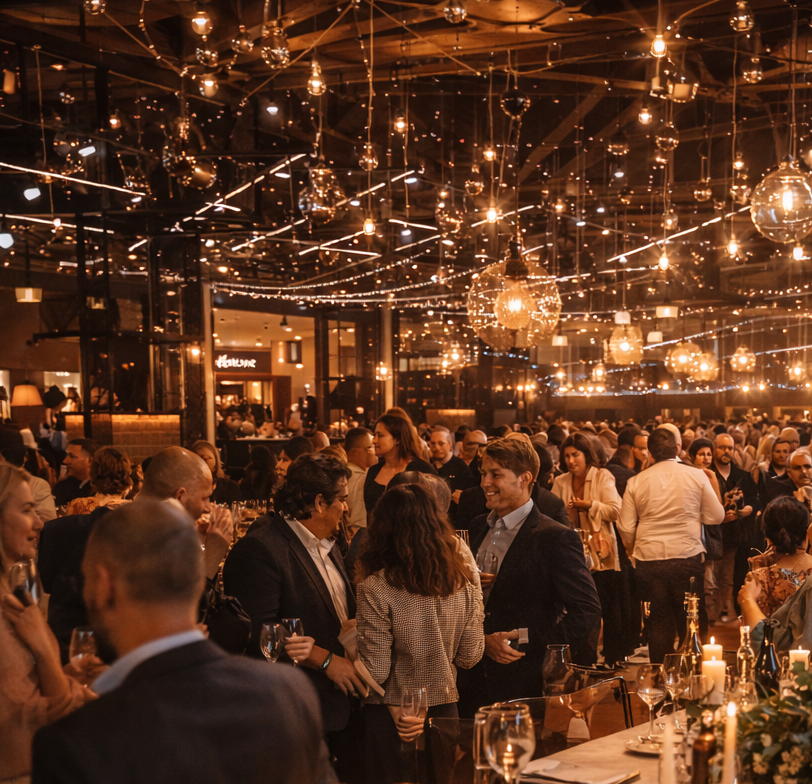
In the past, the programme was the focus. Today, the experience is.
Participants do not expect a sequence of programme items, but an event that feels good and stays in their memory.
What this means in practice:
Events are increasingly designed like products: from the user's point of view, not the organiser's.
Events have long been more than internal gatherings. They are used specifically to achieve company goals.
Typical areas of use:
The difference lies in the ambition:
Events must achieve measurable impact.
Large, standardised events are losing relevance. Participants expect individual experiences.
New approaches:
For large events in particular, personalisation is becoming the decisive differentiator.
Technology is playing an ever greater role, but not every innovation automatically creates added value.
Useful areas of application:
The key point: technology should improve the event, not complicate it.
Companies today expect faster, more efficient event planning combined with higher quality.
What is changing:
The trend is towards scalable event solutions that can easily be repeated and adapted.
The demands on business events are rising. At the same time, they need to become more efficient and measurable.
This leads to a clear shift:
The future of business events is clear:
experience-driven, strategic, personalised and efficient.
Companies that understand and implement these trends early create not only better events, but also a real competitive advantage.
hey! Events supports you in exactly that:
with modern concepts, digital processes and a strong network to make business events future-proof.